Hospitals Spend Millions Preventing Cyberattacks. What Happens When Prevention Fails?
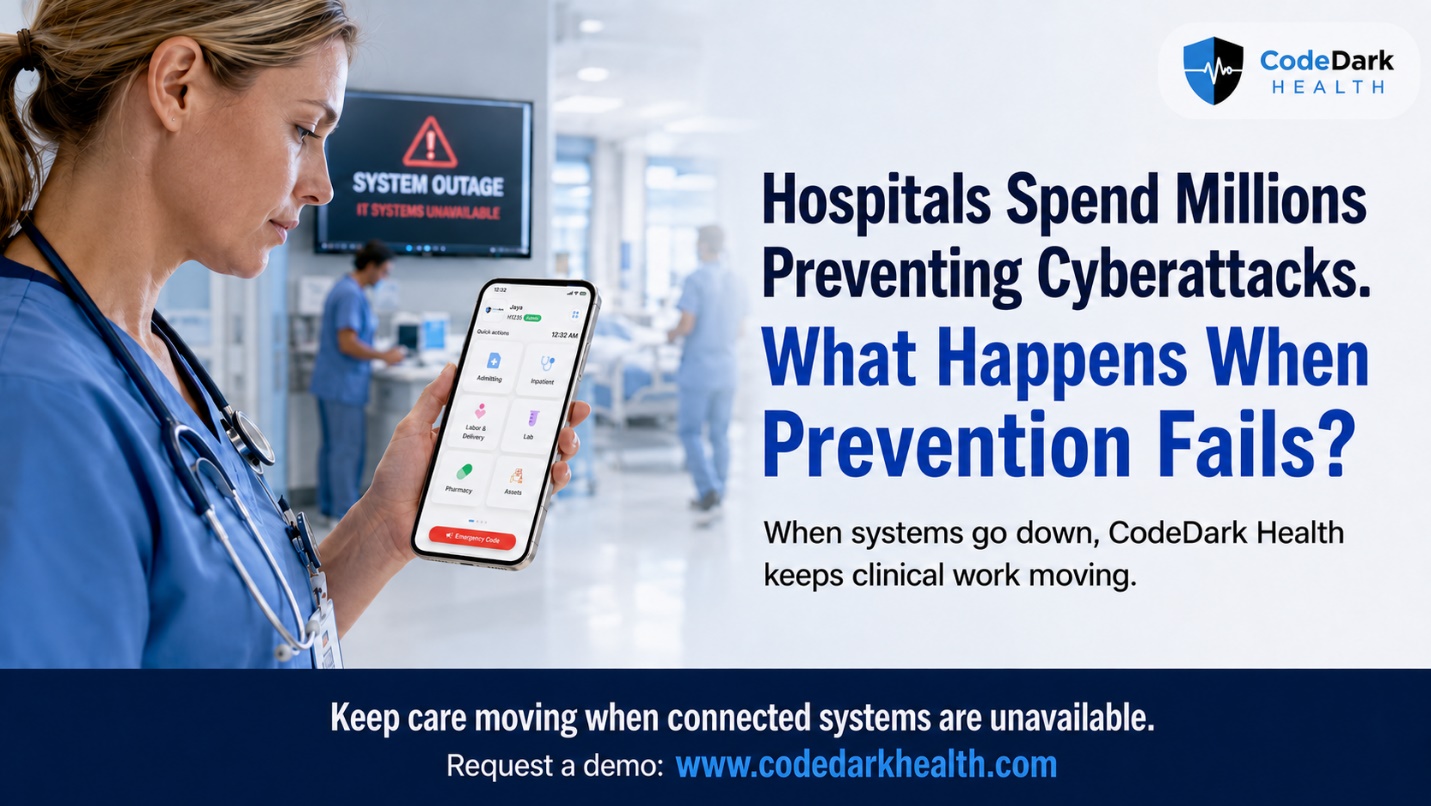
Cybersecurity is the first line of defense. Clinical continuity helps hospitals keep caring for patients when prevention is no longer enough.
Healthcare organizations continue to invest heavily in cybersecurity to defend against ransomware, data breaches, and other cyber threats. Firewalls, endpoint protection, threat monitoring, and employee training all play an essential roleâbut no security program can eliminate risk entirely.
The real question is what happens when prevention fails and critical systems become unavailable?
Downtime Is More Than an IT Problem
When an EHR outage or cyberattack occurs, clinicians may lose access to patient records, medication administration, laboratory workflows, clinical documentation, and communication systems. Without a reliable continuity strategy, hospitals often resort to manual processes that can slow care, increase operational risk, and impact revenue.
Clinical Continuity Completes the Strategy
A comprehensive healthcare resilience plan requires both cybersecurity and clinical continuity. While cybersecurity works to prevent attacks, clinical continuity ensures hospitals can continue delivering safe patient care when technology is unavailable.
Together, these two disciplines help organizations strengthen operational resilience and minimize disruption during downtime events.
How CodeDark Health Completes the Continuity Strategy
CodeDark Health is a clinical continuity platform designed to help hospitals maintain critical clinical workflows during cyberattacks, EHR downtime, ransomware events, and other technology failures. By supporting nursing, pharmacy, laboratory, admitting, billing, and other essential departments, CodeDark Health enables caregivers to continue working while IT teams focus on system recovery.
Be Ready for the Day Prevention Isn't Enough
Cybersecurity will always be the first line of defenseâbut it shouldn't be the last. Healthcare organizations that prepare for downtime are better positioned to protect patient safety, maintain continuity of care, and recover more quickly when systems go offline.
Because true resilience isn't measured by preventing every attackâit's measured by how well patient care continues when technology is unavailable.
Take the Next Step
Discover how CodeDark Health can complement your hospital's cybersecurity and resilience strategy. Visit CodeDark Health to learn more or request a demo.